
Velvet Stitch
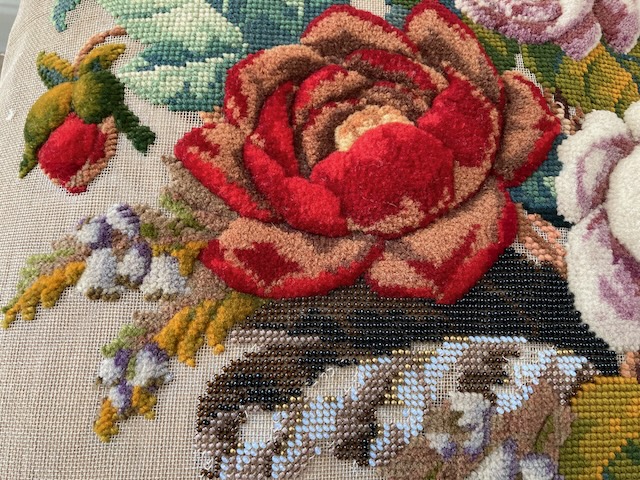
Photo: Ann-Marie Kennedal
The velvet stitch, consisting of a cross stitch and a loop, is a counted thread stitch most commonly used in canvas work. The loops can be left intact or cut; if cut, the seams resemble velvet fabric or carpet pile. The velvet stitch can be used as a fringed border or as a fill stitch for animal fur or sculpturally for anything else that needs to be fluffy.
There are many different ways to create the velvet stitch, here below is a description of a common variant that is durable.
ATTENTION! embroider surfaces with flat stitches around the velvet stitch first and then the velvet stitches. Otherwise, the flat stitches may accidentally catch the looped threads in the velvet stitch.
Thick, soft woolen tappesserie threads is preferred. Those of you who want to experiment with your own expressions can try other fibers such as silk ribbon, multi-strand cotton or silk thread and metallic multi-strand braids for a distinctly different look.
Use either single (mono) or double (penelope) canvas or even counting linen,; Each row should be worked from left to right and from the bottom to the top of the motif; each new row should be embroidered directly above the previous row it ensures that the loops will not get in the way of the seam in the next row.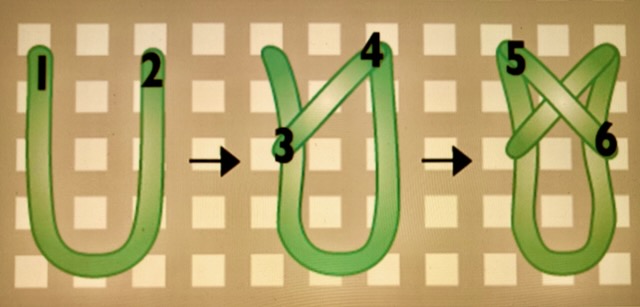
Use a needle, pencil or a flat piece of cardboard as a gauge to get equal length loops.
For large areas, cut and trim the loops to the desired length as the seam progresses. Insert a small, sharp scissors at the base of a row of loops and cut a few loops at a time. Start with long loops and gradually trim them to the desired length.
Cut all the loops in row one after the stitches in row two have been sewn and so on. For small areas, you can cut and trim after you finish sewing.
All loops do not need to be trimmed to the same length. Sculpt velvet stitch loops to different heights to enhance the look of animals, flowers and birds. If the weave is fine and closes tightly around the threads, the cut loops will be tight and support each other. Use different shades of wire to shade and enhance the sculptural effect. Brush the cut loops with a toothbrush or nail brush. To get extra fluffiness the desired effect. You can also steam the work beforehand for a smoother surface.
Other names for velvet sleep: raised Berlin work, raised wool work, plush work, French raised work, velvet wool work, sculpture.
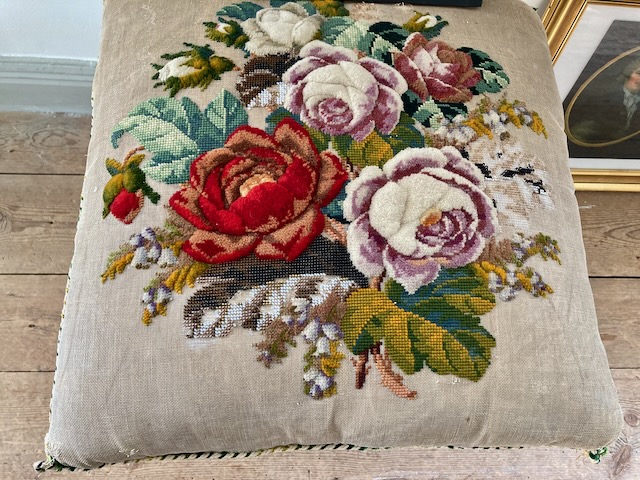
Photo: Ann-Marie Kennedal
This seat cover was embroidered during the empire period - early 19th century - at Ekebyhov castle, Ekerö.
The siblings Ihre. Albrecht, Elof, Charlotta, Sophia, Maria Anna and Anna Sophia spent many hours together under the stairs in the hall of Ekebyhov castle. They embroidered cushions, chair seats and other interior details for the castle.